Unlisted preview · available to anyone with the linkThis page does not calculate airline eligibility.
Assistance dog travel · concept preview
Your independence. Your dog. Your journey together.
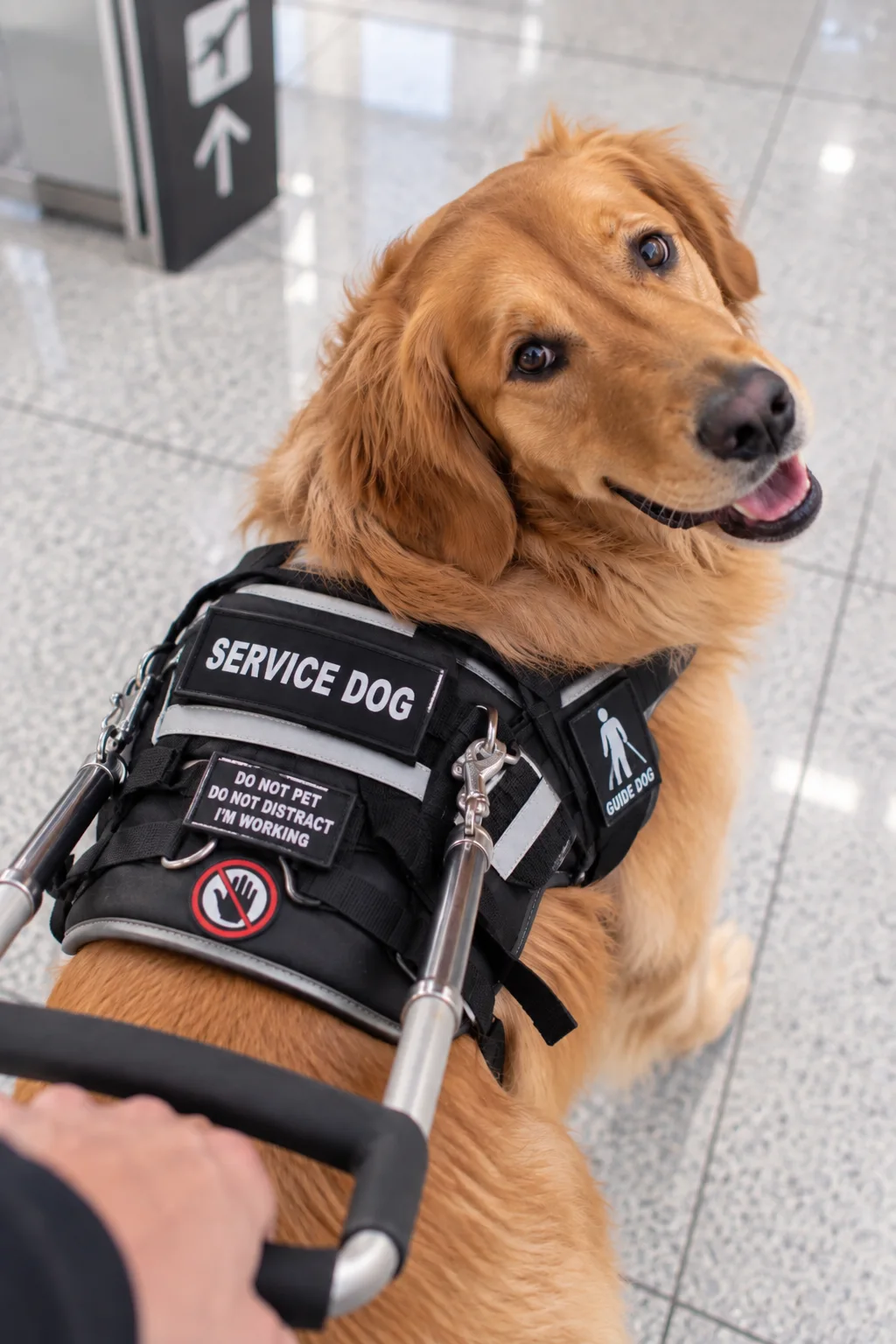
Flying with a guide or assistance dog
Travel with your guide or assistance dog: understand your rights, prepare the necessary documents and plan each stage of your journey.
Preparation, not permission. This independent preview helps organise your questions. It does not certify a dog, find available flights or decide your right to travel.
Start here · choose the right travel pathway
Is this the right guide for your dog?
A guide or assistance dog is individually trained to perform tasks for a person with a disability. This includes guide, hearing, mobility, medical alert and psychiatric assistance dogs. Comfort from companionship alone is different from trained assistance.
What your dog is trained to do matters. Recognition, documentation and travel requirements vary by country, airline and itinerary. This guide does not assess or certify your dog's status.
Your choice stays on this page. It is not saved or sent anywhere.
Emotional support alone does not qualify a dog for this assistance-dog pathway. That does not mean your dog cannot fly in the cabin: pet-travel options and specific emotional-support arrangements depend on the airline and journey.
Specialist shared flights and private charters may be another option where available. Our dedicated premium pathway is not available from this preview yet.
Therapy dogs support people in settings such as hospitals or schools. Military, police and rescue dogs perform other working roles. These roles alone do not make a dog an assistance dog for a traveller with a disability.
Contact the operating airline about its specific working-dog arrangements, or explore ordinary pet-travel options. This assistance planning form does not cover those roles.
A dog trained to assist a veteran with a disability belongs in the assistance pathway because of that function, not the person's military status.
Trained assistance: the dog has learned specific actions to help with a disability. A psychiatric assistance dog belongs here too; a disability does not have to be visible.
Emotional support: the benefit comes from companionship itself. A therapy dog's role is to support people in a care or community setting. Neither role alone establishes assistance-dog travel status.
Still in training? Rules for fully trained assistance dogs may not apply. Ask the airline's accessibility team about its separate arrangements before booking.
If you are unsure, discuss the dog's training with your trainer and the operating airline. You can change your choice above; this page will not classify your dog for you.
Your dog supports your daily independence. Travel planning should respect your needs and let you make informed choices.
Different checks, different purposes
Evidence of training, airline arrangements and border health documents are not interchangeable. Requirements can differ between journeys.
Clear answers, honest limits
A training document alone is not a guarantee of boarding. Know what has been confirmed, what is still unresolved and who can help.
Know your rights as well as the practical steps. The legal protections and arrangements that apply depend on the journey, the operating airline and the dog's recognised status. Keep these separate from border health requirements. For a French starting point, see the DGAC's official air passenger rights guidance (in French).
Prepare your journey with a trained assistance dog
These are general preparation questions, not flight results. Entering a route does not calculate its requirements.
These are questions to resolve, not checked requirements or approval for your route. Keep any airline confirmation with your travel documents.
Five checks to prepare together
Training and recognitionAsk which evidence the airline will consider, who assesses it and what alternatives it accepts if the requested document is not issued in your country. Training pathways differ; this page does not rule on recognition.
The airline operating each flightIdentify the operating carrier, including on codeshares. Ask about its forms, notice period, confirmation process and safe floor space for your dog. Confirm every segment.
Border and animal-health documentsCheck departure, destination, any transit and your return journey separately. Ask the relevant authorities and your veterinarian which identification, vaccination and documents apply.
A manageable day of travel, from door to doorPlan your transport to the airport and onward from your destination airport. If you want airport assistance, identify the meeting point and the help you would like. Include check-in, security, relief areas and the dog's comfort. Consider a direct flight where practical: fewer transfers mean fewer handovers to arrange.
A contact if something goes wrongKeep the airline's accessibility contact and your written confirmations to hand. If staff question an arrangement, ask them to contact the team that confirmed it and explain the reason for any refusal.
Different documents, different purposes
What does evidence of training establish?
It documents the dog's training; it is not an animal-health document. French national identification documents, where applicable, have their own role. The ANM' guide to documents and access (in French) explains the French context. Do not assume that one document settles recognition for every international journey.
Are animal-health documents still a separate check?
Yes. Identification, vaccination and entry documents concern animal-health and border requirements. Check what applies to departure, destination, transit and the return journey with the relevant authorities and your veterinarian. Evidence of training does not replace these documents.
What are the airline's forms and confirmations for?
They record the information and arrangements requested for the booking. Check the operating airline for each segment and reuse existing evidence where it is accepted. An airline confirmation does not replace border documents. MyDogCanFly does not issue a certificate, validate documents or ask you to upload them here.
A worked example: Montréal → Paris
This is how a useful answer might look for someone travelling with a trained guide or assistance dog. The three cards summarise published airline policies—not available flights or approval for an individual traveller.
Example status: policies to review. We have not checked schedules, nonstop services, seat availability, the operating airline or space for the dog. Confirm the conditions for the flight you intend to take before booking.
Air Canada
Published policy
Air Canada provides for eligible service dogs to travel at no charge on flights it operates. Its service dog form also covers international travel.
What to do
Air Canada asks travellers to send its service dog form and evidence of the dog's training to Accessibility Services at least 48 hours before departure. It says it will do its best to accommodate later requests.
Still to confirm
Does Air Canada operate the flight in question? Is there enough floor space for this dog in that cabin? Which documents apply to this booking?
Air France says trained guide and assistance dogs may travel in the cabin free of charge, subject to its conditions. The dog must wear a harness and must not obstruct the aisles.
What to do
Air France recommends making the request at least 48 hours before departure. For flights leaving Canada, it directs travellers to its local assistance team.
Still to confirm
Who operates the chosen flight? What proof of training will be reviewed? Where can the dog safely rest in that cabin?
Air Transat says certified service dogs travelling with a person with a disability are welcome in the passenger cabin when accompanied by the required certification and documents.
What to do
Check the exact arrangements with Air Transat's accessibility team before booking. We do not show a route-specific deadline until it has been established clearly.
Still to confirm
Does Air Transat operate the proposed flight? Which documents will it require for this dog, and what cabin space can it provide?
This is an illustrative, source-led example—not a live flight result. It does not determine the dog's status, reserve a place or replace confirmation from the airline and relevant authorities.
Training deserves clearer recognition
A dog may have been trained, yet its handler can still face unfamiliar document requests or inconsistent treatment. Clearer recognition and better staff understanding address different parts of that problem.
This is work in development, not a universal boarding pass. We do not present a certificate as available or accepted by every airline. This preview neither issues nor validates one.
MyDogCanFly's role here is practical preparation: helping travellers separate the questions, find the relevant sources and keep track of what still needs confirming.
A document is only helpful if the people handling it understand it. These practical steps can help you ask for clarification; they are not a guarantee that a dispute will be resolved.
Ask who can resolve the issueContact the operating airline's accessibility team or the airport assistance team, depending on the problem. Ask staff to check any written arrangement already made.
Keep a useful recordNote the flight, time, place, explanation given and people or teams involved. Keep confirmations and correspondence. You do not need to upload them here.
Find the right supportUse the airline or airport's complaint route and, where appropriate, seek help from a guide or assistance dog organisation or the relevant passenger-rights body. Procedures depend on the country.
Resources reviewed on 25 September 2026. These links do not imply a partnership, endorsement or certification of MyDogCanFly.
Information everyone can use
We are designing this journey to make sense on screen and when read aloud: clear headings, short steps, keyboard navigation and answers that never rely on colour alone. That clarity also helps family members, travel advisers and journalists understand the process.
The explanatory sections remain available without JavaScript. The pathway selector and optional planning demonstration need JavaScript; they keep your entries on this page and move keyboard focus to the relevant response. You can also print the page or save it as a PDF using your browser.
Testing with disabled travellers remains essential. The following checks are still needed before claiming compatibility:
NVDA and JAWS screen readers on desktop;
VoiceOver on Apple devices and TalkBack on Android;
text and display magnification, including at 200% and 400% zoom.
Current limits: testing with these screen readers and at 200% and 400% zoom is not complete. We do not claim verified compatibility or accessibility certification.